Best Pic Comb for Curls That Performs
- Home
- Single Blog
Best Pic Comb for Curls That Performs
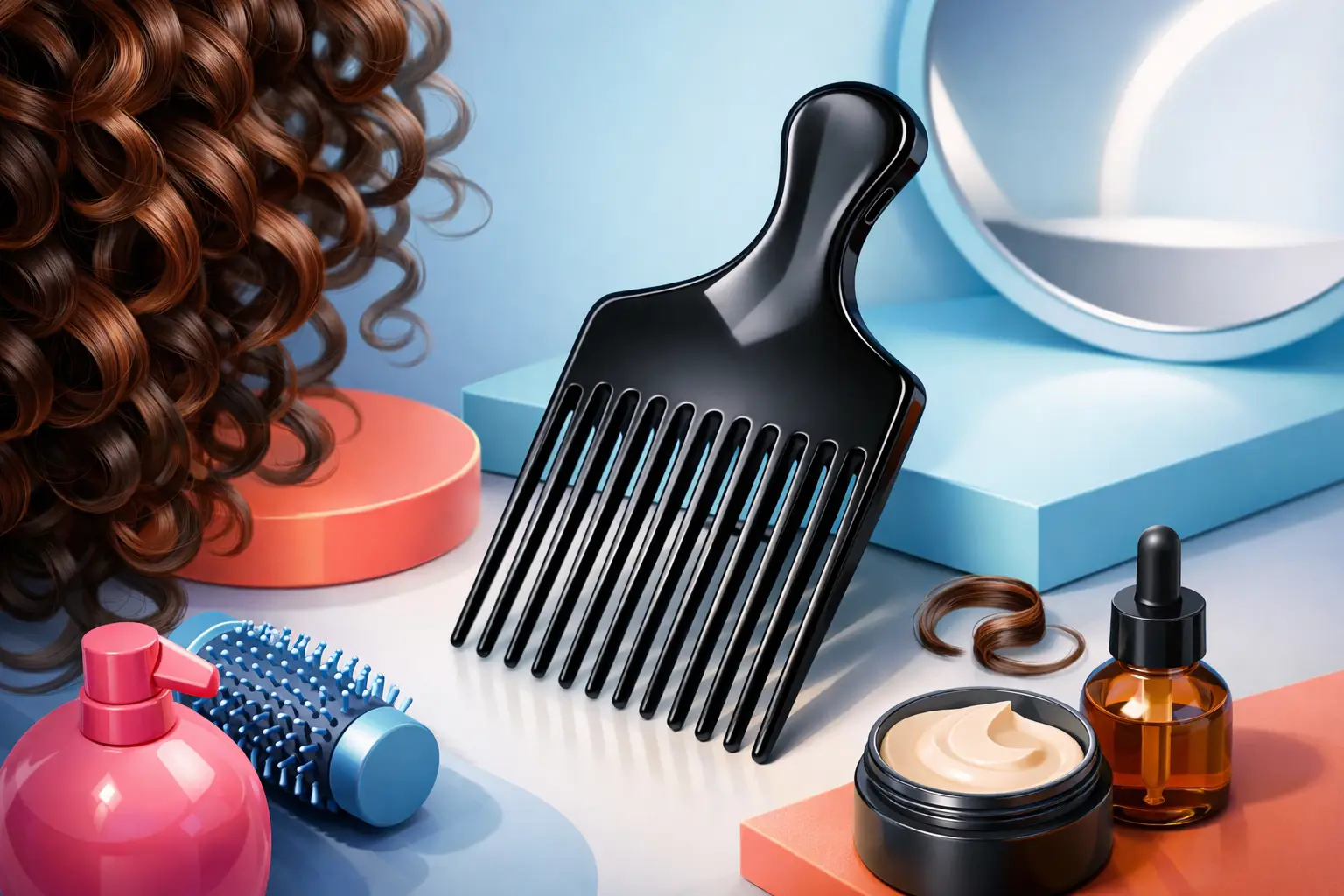
A weak pic comb will tell on itself fast. You go in for lift, it snags at the root, bends under pressure, and turns a clean shape into frizz. If you’re looking for the best pic comb for curls, the real question is not what looks good in the package. It’s what gives you controlled lift, keeps the pattern intact, and holds up when curls are dense, coily, or packed tight.
That matters whether you’re behind the chair or working your own hair at home. Curls need separation and volume, but they also demand respect. The wrong tool pulls too hard, disturbs clumping, and leaves the finish puffed out in the wrong places. The right pic comb gives you room at the root, a steady hand, and a better result with less force.
What makes the best pic comb for curls
The best pic comb for curls is built for tension without aggression. That starts with tooth spacing. If the teeth are too close together, the comb acts more like a detangler than a lifting tool, and that’s where you start disrupting the curl pattern. Wider spacing gives curls room to move around the teeth instead of fighting them.
Length matters too. Short teeth might work on looser curls or shorter styles, but they struggle on thick hair and denser textures because they never really reach the base. Longer teeth can get down to the root where volume is created, but only if they’re strong enough not to flex too much. A pic that folds under pressure is wasting your time.
Material is another place where quality shows. Cheap plastic can feel fine on day one and start warping, cracking, or catching on the hairline after regular use. A professional-grade pic comb should feel balanced in the hand and solid through the teeth. You want enough give that it doesn’t feel harsh, but not so much that it loses shape during normal use.
The handle is easy to overlook until you’re working fast. A slick, flimsy grip can make even a decent comb feel cheap. If you’re lifting curls for shape, detail, or finish, control comes from the hand as much as the teeth. The tool should feel planted, not slippery.
The biggest mistake people make with curl pics
A lot of people shop for a pic comb like they’re buying a general-use comb. That’s where problems start. A curl pic is not there to rake product through the hair from roots to ends. Its job is targeted lift, shape control, and volume management.
When someone jams a pic all the way through the curl and drags outward, they usually get one of two bad results. Either the hair frizzes up and loses definition, or the style gets stretched and uneven. That is not a tool problem alone. It is also a technique problem.
The best results usually come from lifting at the root and stopping there. Think placement, not pulling. Get in at the scalp, raise the base gently, and let the curls fall back into place. That keeps the pattern intact while opening up the shape.
How to choose the right pic for your curl type
Not every curl head needs the same tool. If your texture runs loose to medium, a moderate tooth length with wide spacing is usually enough. You want lift, but not so much depth that the tool feels oversized or clumsy.
For thick curls, coils, and tighter patterns, the best pic comb for curls is usually one with longer, stronger teeth and enough spacing to move without dragging. Dense hair puts more pressure on the tool, so strength matters more here. This is where cheap combs fail first.
Hair length also changes what works. Short rounded styles and cropped curls can do well with a more compact pic that gives precise lift. Longer shapes often need more reach so you can get under the weight without overworking the mid-lengths.
If your hair is fine but curly, be careful about going too rigid or too sharp. You still want durability, but you don’t need a heavy-handed tool. A smoother finish on the teeth and a lighter touch in use will protect volume without roughing up the surface.
Metal or plastic – which works better?
This depends on the hair and how the tool is being used. Metal picks can give excellent root access and tend to hold their shape well. On dense hair, that firmness can be a plus. But metal can also feel less forgiving if the tips are rough, the finish is poor, or the user gets heavy-handed.
A quality plastic pic can be the better call for many curl routines because it gives enough structure without feeling too aggressive. The trade-off is durability. Low-grade plastic wears out faster and can develop rough points that catch the hair.
For most barbers and serious grooming users, the better question is not metal versus plastic in the abstract. It’s whether the pic is finished cleanly, built to last, and matched to the texture you’re working on. Good design beats hype every time.
Signs a pic comb is costing you results
You can usually tell within a few uses when a pic is not built right. If the teeth bend too easily, the root lift won’t be consistent. If the comb snags around the crown or hairline, the finish will start looking blown out instead of shaped. If your hand has to compensate for the tool every time, you’re already losing efficiency.
In the shop, that matters because speed and consistency are part of the service. At home, it matters because a bad tool creates bad habits. People start forcing volume, overpicking, and blaming their texture when the real issue is control.
A solid pic should move cleanly, hold alignment, and help you place volume where you want it. Not everywhere. Just where it improves the shape.
Using a pic comb without ruining curl definition
The best tool still needs the right timing. Never go in with a pic too early if the hair is still overly wet and fragile, especially if product hasn’t set. Wait until the curls have formed enough to hold a pattern. On dry hair, work even lighter. Dry curls can handle lifting, but not rough handling.
Start from the root area only. Insert the pic gently, lift upward, then release. Do not drag the teeth through the full strand unless you’re intentionally stretching the shape, and even then, know you’re trading some definition for size.
Focus on the crown first if volume is the goal. Then adjust the sides only where the silhouette needs balance. That keeps the style controlled instead of turning everything into one wide mass. Barbers already know this from shaping cuts – volume has to support the form.
If you use product, make sure it matches the finish you want. A strong hold foam or curl cream can support root lift if the amount is right. Too much sticky product and even a good pic will start pulling. Too little support and the volume drops out before the hair settles.
What professionals look for in a curl pic
Barbers who take their craft seriously don’t rate tools by branding alone. They rate them by repeat performance. The best pic comb for curls should be something you can pick up every day and trust to do the same job with the same level of control.
That means clean tooth spacing, dependable strength, and a handle that feels right in real work conditions. It also means a finish that doesn’t scratch the scalp or catch the hair. Those details sound small until you’re working through a full day or trying to preserve a client’s curl definition before they walk out.
Professional users also pay attention to how a tool supports the result, not just the process. A pic is not there to replace technique. It should make good technique easier, faster, and more consistent. That’s the standard.
One tool, different goals
Not everyone uses a pic for the same finish. Some want maximum volume. Some want subtle root lift that keeps the curl pattern tight and polished. Others need it for shaping rounded afros, refreshing day-two curls, or loosening compressed roots after a bonnet or cap.
That is why there is no single perfect pic for every curl head. There is, however, a clear standard for what the right one should do. It should lift without tearing through the pattern, separate without snagging, and stay solid under regular use. That’s the baseline.
If you’re choosing one for a professional setup, go with the tool that delivers control first. Flashy design means nothing if the teeth flex, the grip slips, or the finish roughs up the hair. A strong tool earns its place by what it does in the hand and on the hair.
At Encore The Barber, that standard is simple – professional grade, zero compromise. If a pic comb can’t help you shape curls cleanly, preserve definition, and perform day after day, it’s not the right tool. Pick the one that respects the texture and matches the work, and your results will show it.
Share This :
Search
Recent Post
How to Set Trimmer Zero Gap Safely
July 3, 2026
How to Sharpen Lineup Edges Cleanly
July 1, 2026
When to Replace Clipper Blades
June 29, 2026