Best Barber Tools Starter Kit for Clean Cuts
- Home
- Single Blog
Best Barber Tools Starter Kit for Clean Cuts
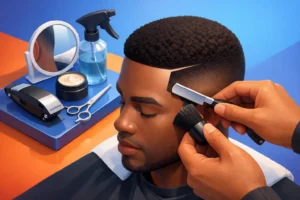
A bad setup shows up in the cut fast. You feel it when your trimmer drags on a lineup, when your clipper overheats halfway through a fade, or when your station turns into a scramble because the basics were an afterthought. The best barber tools starter kit is not about buying the most pieces. It is about building a tight, reliable setup that lets you work clean, move fast, and stay consistent from the first client to the last.
For a new barber, the temptation is to overbuy. For a home user trying to step up to barber-grade results, the mistake is usually the opposite – buying cheap tools that fight you every step of the way. Either way, the goal is the same: get the essentials right first, then add specialty tools once your foundation is solid.
What should be in the best barber tools starter kit?
A starter kit should cover four jobs without compromise: bulk removal, detail work, finishing, and maintenance. If one of those areas is weak, your service slows down and your results get uneven.
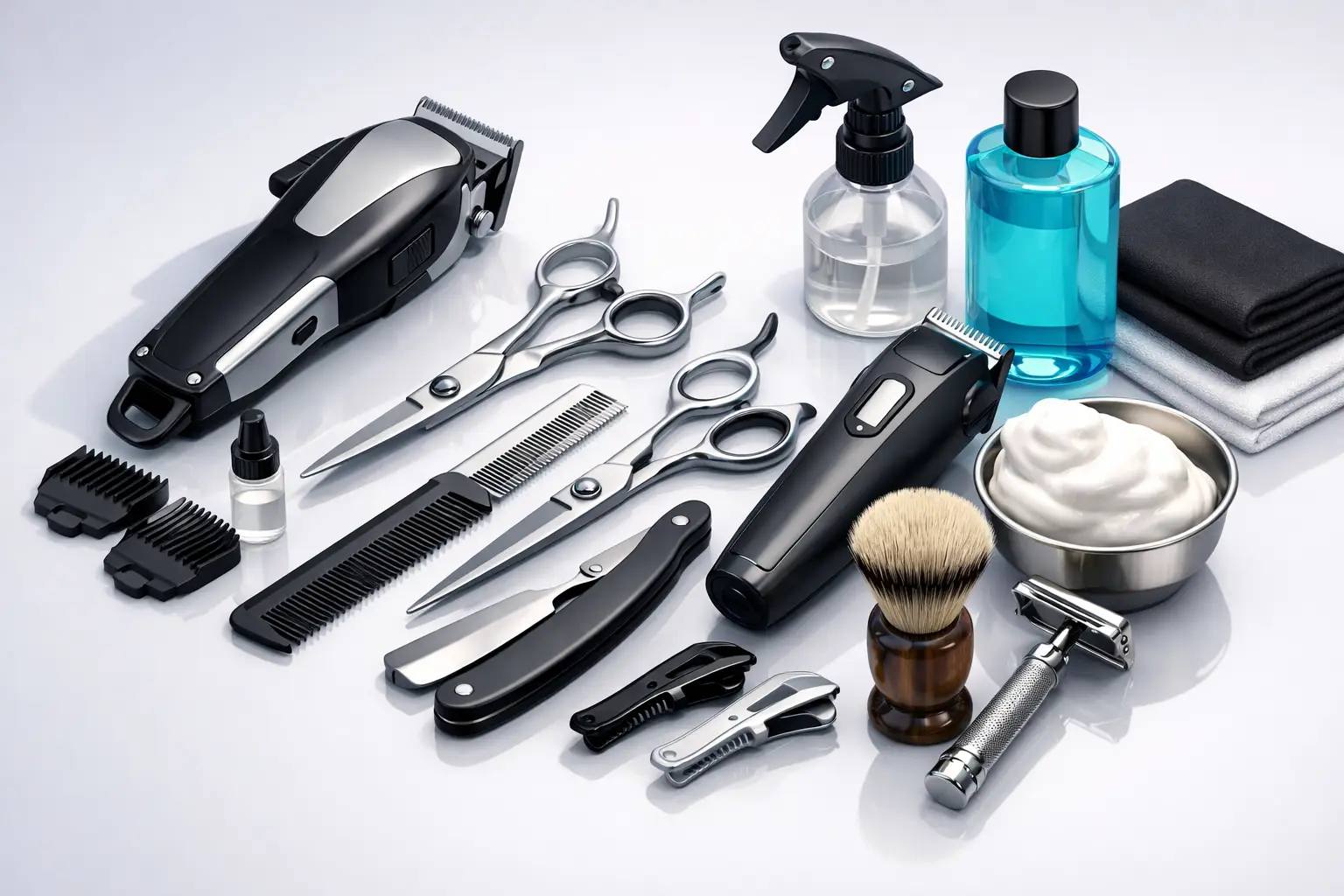
At minimum, your setup should include a dependable clipper, a sharp trimmer, a foil shaver if you do close finishing, a spray bottle, a quality comb, a wave or styling brush, and cleaning tools. If you also handle beard work or sell grooming to clients, beard and scalp care products make sense too. That is the difference between owning tools and having a working system.
Start with the clipper
Your clipper is the engine of the station. It handles bulk weight, builds shape, and sets the pace for almost every service. If the motor is weak, the blade heats up too fast, or the body feels unstable in your hand, your technique has to compensate. That gets tiring, and clients notice the difference even if they cannot name it.
A starter clipper should have enough power to move through dense hair without bogging down, but it also needs control. Heavy-duty sounds good until you are blending around the parietal ridge and the tool feels clumsy. A beginner usually does better with a clipper that balances power and handling instead of the most aggressive machine on the shelf.
Corded versus cordless depends on your workflow. Cordless gives you freedom and cleaner movement around the chair. Corded often gives you steady all-day performance without battery anxiety. If you are cutting full days in a busy shop, that trade-off matters. If you are still building speed, the ease of cordless may be worth it.
Your trimmer decides how sharp your work looks
Clients may not talk about blade geometry, but they know when a lineup is crisp. That is why the trimmer is not a side tool. It is one of the first things people judge in your work.
A good trimmer should hit clean on lineups, sideburns, necklines, and beard edges without forcing multiple passes. It should feel precise in tight areas and stable enough for detail work around corners and curves. The best ones are sharp, but not reckless. There is a difference between a close hit and unnecessary irritation.
For a beginner, zero-gapped setups can be useful, but only if you understand pressure and skin sensitivity. Too much aggression in the wrong hands leads to red skin and callbacks. It is better to learn control with a properly tuned trimmer than to chase the closest possible cut before your touch is ready.
A foil shaver is not optional if you offer skin-close finishes
If your services include bald fades, smooth neck cleanup, or polished face finishing, a foil shaver belongs in the best barber tools starter kit. It takes the look from clean to finished.
The mistake some beginners make is using a trimmer for every close finish. That can work in spots, but it is not the same result. A foil shaver gives that smooth final pass that elevates the service. It also saves wear on your trimmer and helps create a more consistent finish across clients.
That said, not every head or skin type responds the same way. Some clients can handle a very close finish daily. Others need a lighter hand or a different approach to avoid irritation. A pro setup is not just about owning the tool. It is about knowing when to use it.
Combs and brushes do more work than people think
Cheap combs flex, snag, and slow everything down. That matters more than people expect. A solid pic comb helps with sectioning, lifting, control, and shape, especially when you are working through texture and trying to see the blend clearly.
A wave brush or styling brush also earns its place. It helps lay hair in its natural direction so you can read growth patterns before cutting. That means better lineups, cleaner fading, and fewer surprises when the client turns their head. At home, it helps maintain the finish after the cut. In the shop, it is part of presentation and control.
These are not glamorous tools, but they support every service. When your combs and brushes are right, your cutting hand gets more accurate.
The spray bottle keeps the service under control
A spray bottle seems basic until you work without one. Moisture gives you control during prep, helps manage stubborn sections, and lets you reset the hair as you move through the cut.
The difference is consistency. You do not want a bottle that sputters, leaks, or soaks one spot while missing another. Fine mist works better for even application and cleaner section management. It is a small tool, but it affects rhythm all day.
Cleaning tools are part of the kit, not an extra
A lot of starter setups look complete until you ask how the tools are being maintained. That is where corners get cut, and it shows up in performance fast.
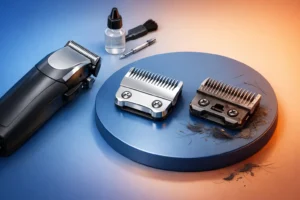
A proper kit needs a cleaning brush for removing loose hair from blades and housings. It also needs the discipline to clean between clients, oil blades correctly, and keep tools dry and sanitary. A barber who ignores maintenance is not saving money. They are shortening tool life, losing cutting efficiency, and risking hygiene issues.
This is where professional habits start. Sharp results come from sharp tools, and sharp tools stay that way because somebody takes care of them.
Add beard and scalp care if you want a complete service setup
Not every starter kit needs retail-ready grooming products on day one, but many barbers benefit from having them early. Beard oil, scalp growth oil, shampoo, conditioner, and treatment products extend your service beyond the chair.
For beard clients, finishing with the right oil improves the look immediately and helps support healthy maintenance after the appointment. For clients dealing with dryness, flaking, or scalp stress, having targeted care products gives you a stronger recommendation than generic advice. It also positions you as a professional who understands the full grooming picture, not just the haircut.
If you are building a station for home use, these products matter too. Good tools can shape the look, but healthy hair and scalp condition help the cut sit better and last cleaner.
How to buy smart without wasting money
The best barber tools starter kit is not the biggest bundle. It is the setup that covers your real services with tools you can trust under daily use.
If you are just starting in the trade, spend more on the clipper and trimmer than on accessories. Those two tools carry most of the work. If your budget is tighter, delay nonessential add-ons before you downgrade your core cutting tools. A flashy case and a pile of extras will not fix weak performance.
If you are a serious home user, think differently. You may not need a full shop rotation, but you still need professional-grade basics if you want clean edges and dependable results. Buying one reliable trimmer, one good clipper, and proper maintenance tools usually beats buying a huge low-cost set that breaks down early.
A practical barber tools starter kit checklist
For most beginners and working barbers, the core setup looks like this:
- Clipper for bulk removal and fading
- Trimmer for lineups, detailing, and beard edges
- Foil shaver for skin-close finishing
- Spray bottle for moisture control and prep
- Pic comb for sectioning and control
- Wave or styling brush for direction and finishing
- Cleaning brush for blade maintenance and sanitation
- Beard or scalp care products if you offer finishing or retail support
That list is enough to get real work done. From there, you can build out with guards, replacement blades, capes, station organization, and specialty tools based on your services.
The best barber tools starter kit should fit your hands and your work
There is no universal kit that works the same for every barber. Hand size matters. Client base matters. Hair texture matters. Service menu matters. A barber focused on fades and lineups may prioritize a different setup than someone doing heavy beard work or grooming services at home.
That is why real barber-tested tools matter more than hype. Professional-grade equipment should give you control, repeatable performance, and durability under pressure. That is the standard. Anything less turns routine cuts into hard work.
If you are building your first setup, stay disciplined. Buy for performance, not noise. Get the tools that let you execute cleanly, maintain them like a professional, and let your skill do the talking. Encore The Barber is built around that same principle – tools should help you work sharper, faster, and with zero compromise.
A strong kit does not make the barber, but it gives good hands the right platform to produce clean work every single day.
Share This :
Search
Recent Post
How to Set Trimmer Zero Gap Safely
July 3, 2026
How to Sharpen Lineup Edges Cleanly
July 1, 2026
When to Replace Clipper Blades
June 29, 2026