Barber Shop Sanitation Guide for Daily Use
- Home
- Single Blog
Barber Shop Sanitation Guide for Daily Use
A missed disinfecting step can ruin more than a haircut. One dirty clipper blade, one reused neck strip, or one station that looks clean but is not actually sanitized can put your clients, your license, and your reputation in the same line of fire. That is why every serious barber needs a barber shop sanitation guide that works in real shop conditions, not just on paper.
Sanitation in a barbershop is not about looking polished for inspections. It is about execution. Clean tools perform better, clients notice the difference, and your workflow stays tighter when you are not scrambling to fix preventable issues. The sharpest lineup in the city means less if your station tells a different story.
What a barber shop sanitation guide should actually cover
A solid barber shop sanitation guide is not just a list of rules taped to the wall. It should cover how you clean, when you disinfect, what gets tossed after one use, and how you keep cross-contamination out of your service flow. The goal is consistency, because sanitation breaks down fast when it depends on memory or good intentions.
There is also a difference between cleaning, disinfecting, and sterilizing. A lot of barbers use those words like they mean the same thing. They do not. Cleaning removes visible hair, oil, residue, and product buildup. Disinfecting uses the proper chemical process to kill many harmful organisms on nonporous surfaces. Sterilizing is a higher-level process that most barbershops do not perform in-house for everyday tools. If your tools are not clean first, disinfectant cannot do its job well.
That matters in the real world. A clipper packed with hair and dried product can still look decent from a distance. Up close, it is a sanitation problem and a performance problem at the same time.
Your tools need a sanitation routine, not occasional attention
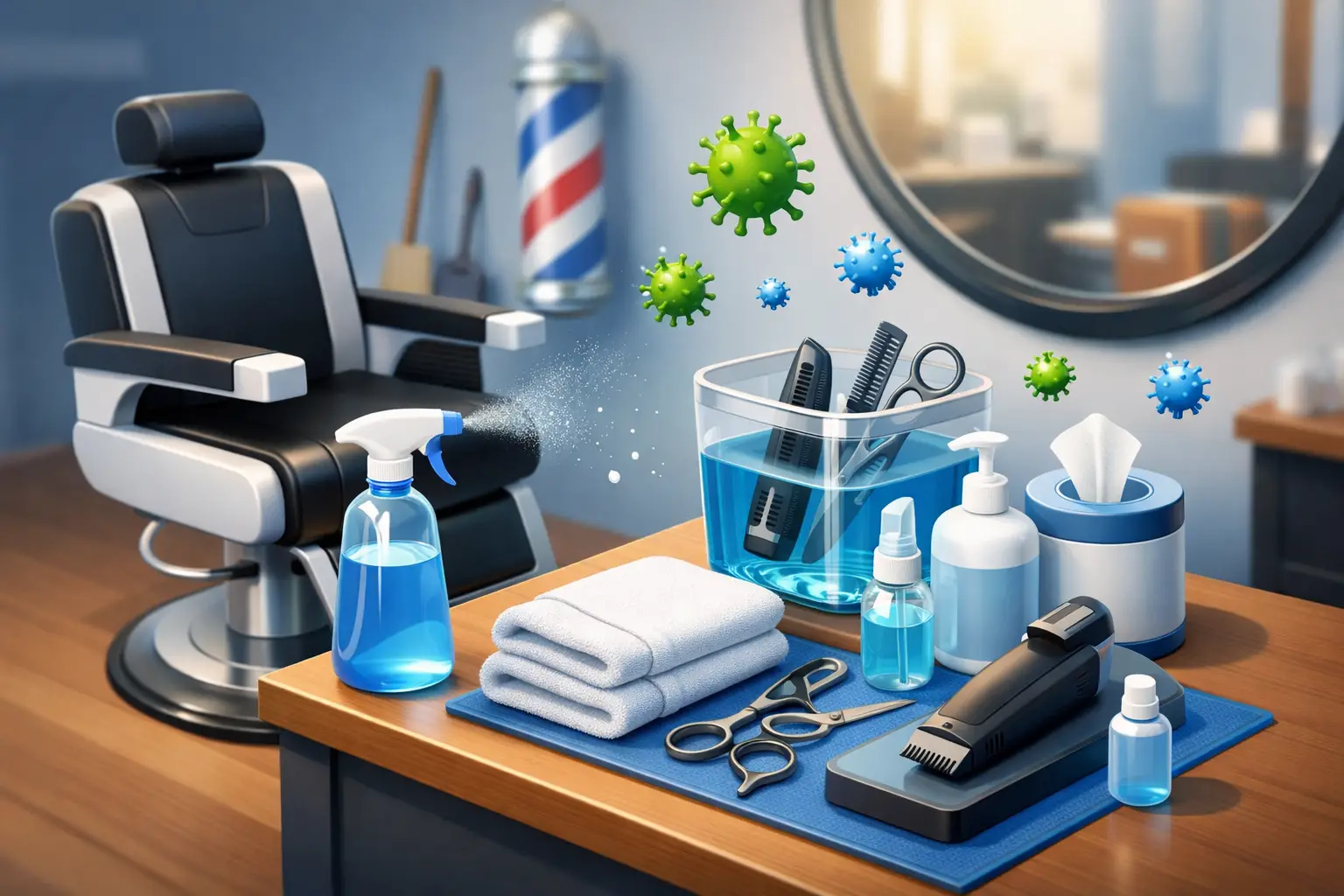
Clippers, trimmers, shavers, shears, combs, brushes, guards, and straight razor handles all need a defined process. After each client, remove visible debris first. Hair trapped under blades, in guards, or around moving parts should be brushed out completely. Then apply the correct disinfecting method based on state board rules and the material of the tool.
Electric tools require more care than people realize. You cannot soak every clipper or trimmer component the same way you would a non-electric comb. That is where many shops get sloppy. Blades may be detachable and easier to disinfect separately, while the body of the tool needs surface cleaning and careful chemical use. If you overdo moisture in the wrong area, you can shorten tool life. If you under-clean, you create risk. It depends on the tool design, so your sanitation process should match the equipment you actually use.
Dry time matters too. Barbers in a rush sometimes spray and wipe immediately, then move on. That is not disinfection. Most products need a stated contact time to work properly. If your shop is busy, build enough tool rotation into your setup so one set can disinfect while another is in service.
The station has to stay clean between clients
Clients may not know your blade model, but they know when a station looks neglected. Countertops, chair arms, headrests, mirrors, trays, and frequently touched surfaces should be cleaned throughout the day, not just at closing. Hair on the floor is expected during a cut. Hair left sitting around a station after the service is a different message.
Your cape routine matters here. Capes should be used with a clean neck strip or disposable barrier every time. No exceptions. A cape may look fine after one client, but direct skin contact without a barrier is not a professional standard. Towels are the same story. If they touch a client, they need to go to the laundry after use.
Small habits keep the station under control. Wipe handles. Empty used materials fast. Keep clean tools separate from used ones. Do not let your workstation become a mix of half-clean and half-dirty equipment. Once that line gets blurry, mistakes happen.
Single-use means single-use
Some sanitation failures come from trying to stretch supplies. That is a losing move. Neck strips, cotton, tissues, paper products, and razor blades designed for one-time use should be discarded immediately after service. Straight razor work demands zero shortcuts. New blade, proper disposal, every client.
The same goes for anything porous that cannot be fully disinfected. If it cannot be cleaned and disinfected according to regulations, it should not be reused. This is one area where saving pennies can cost dollars, and more importantly, trust.
Clients may never say anything when they notice a corner cut. They just do not come back.
Hand hygiene is part of the service
A lot of sanitation talk stays focused on tools, but hands move everything in the shop. Wash your hands before and after each client when possible, and especially after handling used tools, touching your face, eating, cleaning, or using the restroom. If handwashing is not immediately available between steps, use an appropriate hand sanitizer, then wash as soon as you can.
Gloves are not mandatory for every haircut, but they are the right call in situations involving blood exposure, skin irregularities, or chemical handling. The key point is this: gloves are not a replacement for hand hygiene. Dirty gloves are just dirty hands with better marketing.
Don’t ignore the waiting area, restroom, and checkout zone
A clean chair means less if the rest of the shop is slipping. Door handles, payment devices, restroom fixtures, waiting area chairs, and product shelving all collect traffic. These areas may not be part of the haircut itself, but they are absolutely part of the client experience.
If you retail product, keep testers clean or remove them entirely if they cannot be maintained properly. Dusty shelves and sticky bottles make your operation look careless. A professional shop should feel controlled from the front door to the last sweep at night.
Laundry, trash, and sharps disposal need rules
Used towels, smocks, and linens should go straight into a closed container or designated hamper. Do not pile them on a counter or drape them over a chair for later. Clean and dirty laundry must stay separate. Wash with appropriate detergent and dry thoroughly before reuse.
Trash should be emptied often enough that used materials are not overflowing in public view. If your services include blades or other sharps, use an approved sharps container and handle disposal according to local and state rules. This is not the area to improvise.
State board rules are the baseline, not the finish line
Every barber should know their state board sanitation requirements. Those rules are the minimum standard you are expected to meet. Smart shops go further by building systems that make compliance automatic. Checklists help. Labeled containers help. A written cleaning schedule helps. Training every barber in the shop to follow the same process helps even more.
This is especially important when multiple people share stations or tools. Without clear standards, one barber’s clean is another barber’s maybe. That kind of inconsistency creates weak spots fast.
If you run the shop, sanitation is a management issue as much as a technical one. Set the standard, stock the right supplies, and inspect the process regularly. Do not assume adults with experience automatically stay disciplined under pressure.
Sanitation also protects your equipment investment
Good sanitation is not just about safety. It supports tool performance. Clippers clogged with buildup run hotter, cut worse, and wear down faster. Dirty combs drag. Neglected shavers lose efficiency. A proper cleaning brush, the right disinfecting products, and a consistent maintenance routine protect your results and your gear.
That is one reason professional barbers put real thought into what they keep at the station. Tools should work hard, clean up properly, and hold up under daily use. Brands like Encore The Barber speak to that standard because working barbers do not need gimmicks. They need equipment and care routines that support clean execution every day.
The clean shop advantage is real
There is a business side to all of this. Sanitation builds confidence. Clients may not compliment your disinfecting routine the way they praise a fade, but they absolutely feel the difference between a shop that runs clean and one that runs loose. Clean shops earn repeat business, stronger word of mouth, and fewer problems that drain time and money.
And there is a trade-off worth acknowledging. Strong sanitation habits take supplies, training, and discipline. They can slow you down if your setup is inefficient. But the answer is not to do less. The answer is to build a workflow that keeps you sharp without sacrificing standards.
A clean shop is not extra credit in this business. It is part of the cut. Tight systems, clean tools, and disciplined habits tell clients exactly what kind of professional they are sitting with before the first guard ever touches their head.
Share This :
Search
Recent Post
How to Set Trimmer Zero Gap Safely
July 3, 2026
How to Sharpen Lineup Edges Cleanly
July 1, 2026
When to Replace Clipper Blades
June 29, 2026