Trimmer vs Clipper Difference Explained
- Home
- Single Blog
Trimmer vs Clipper Difference Explained
The fastest way to spot an inexperienced setup is watching someone try to do a full haircut with a trimmer – or edge a lineup with a clipper. The trimmer vs clipper difference is not minor. It affects speed, control, finish quality, and how clean your work looks when the client gets out of the chair.
If you cut hair for a living, you already know every tool has a job. If you cut at home and want barber-level results, the same rule applies. Clippers remove bulk and shape the haircut. Trimmers handle detail, edging, and close work. That is the simple answer. The real answer is in how each tool is built, how it cuts, and where it performs best.
What is the trimmer vs clipper difference?
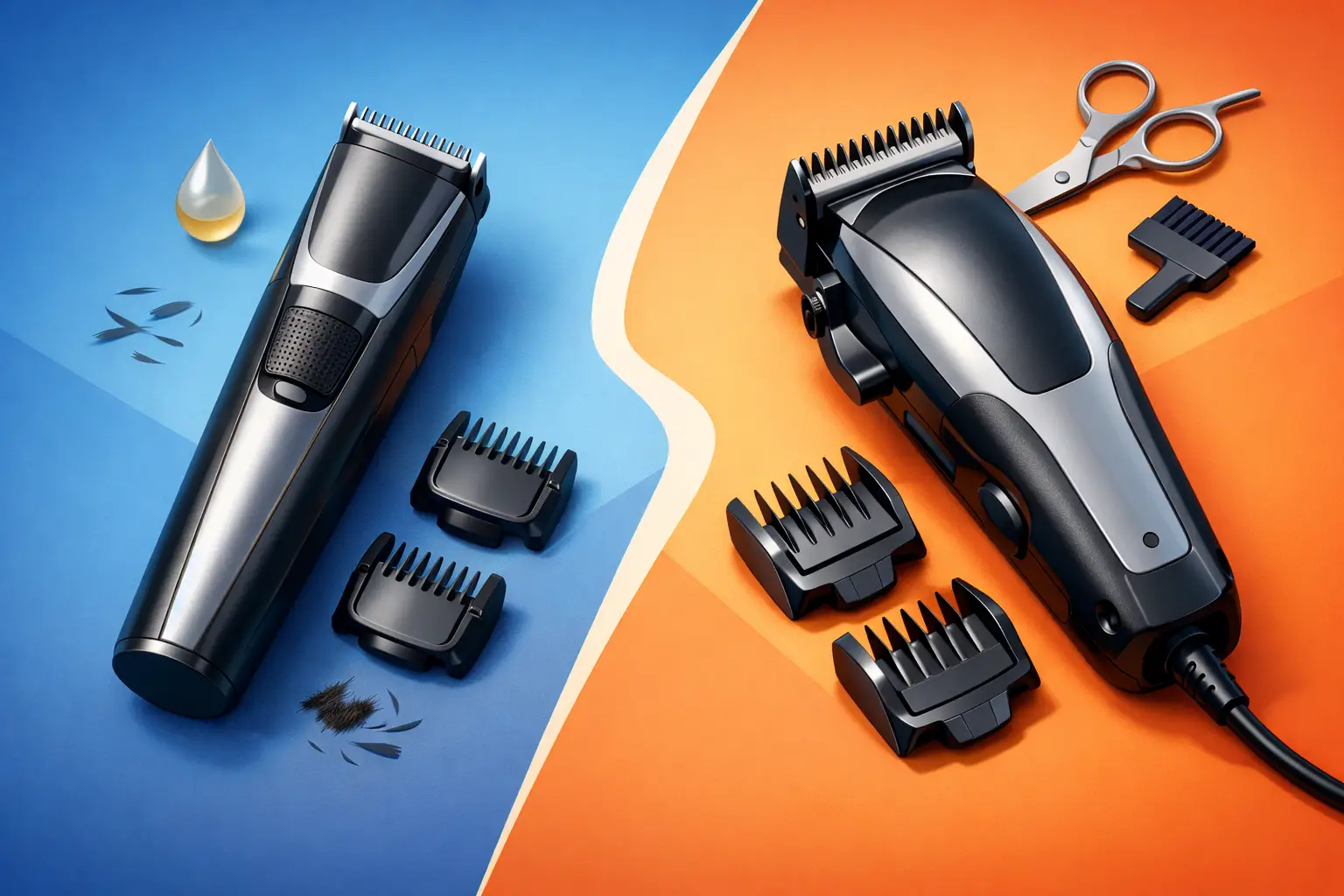
At the core, clippers are built for power and range, while trimmers are built for precision.
A clipper usually has a wider blade, a stronger motor setup for continuous bulk removal, and compatibility with guards that let you cut different lengths through the hair. It is the machine you reach for when you are taking down weight, building a fade, cleaning up the sides, or shaping the overall cut. In barber terms, the clipper does the heavy lifting.
A trimmer is designed to cut closer and tighter in small areas. The blade is typically narrower or more detail-oriented, and the tool is meant for lineups, outlines, beard work, neck cleanup, around the ears, and finishing touches. A trimmer is not there to replace a clipper. It is there to sharpen the work the clipper started.
That distinction matters because using the wrong tool costs you time and consistency. A clipper can get close, but it will not edge as clean as a trimmer. A trimmer can remove hair, but it is slower and less efficient for full sections or dense bulk.
Clippers are for structure and bulk removal
When a client sits down for a taper, fade, buzz cut, or standard men’s cut, the clipper is the foundation. It lets you move quickly through bulk, establish your shape, and work through lengths with guard control. That is what makes it the everyday workhorse in a shop.
A good clipper gives you leverage in three areas: power, consistency, and blend control. You can open and close the lever, switch guards, and move through the haircut in a repeatable system. For barbers, that repeatability is money. For home users, it is the difference between a clean cut and a patchy one.
This is also why clippers are better for thick hair, large sections, and haircut architecture. If the goal is to reduce volume, set the silhouette, or move through a fade efficiently, you want clipper performance. Trying to do that with a trimmer slows everything down and puts more stress on the blade.
Trimmers are for finish work and precision
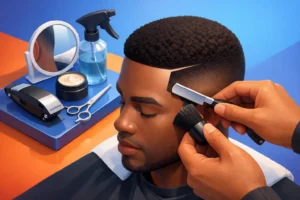
Once the haircut is built, the trimmer takes over where detail starts to matter most. This is where sharp lines, clean necks, beard outlines, and temple work come into play.
A trimmer is made for close-contact cutting in visible areas. It is what defines a lineup, cleans the perimeter, and puts a polished edge on the final result. If your clipper builds the cut, your trimmer signs it.
That close precision is especially important around the front hairline, sideburns, behind the ears, and beard borders. These are small zones where too much blade width or too much aggression can throw the whole look off. A trimmer gives you tighter control and better visibility.
For serious grooming at home, this is the tool that makes the biggest visual difference in between cuts. You may not need to fade your own hair every week, but cleaning the neckline, mustache edge, cheek line, or temple area with a trimmer keeps the whole look fresh.
Blade design changes how each tool performs
A big part of the trimmer vs clipper difference comes down to blade setup.
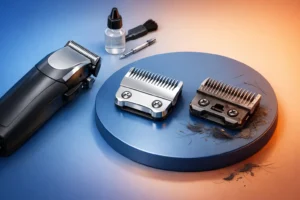
Clipper blades are designed to move through more hair with more efficiency. They are ideal for cutting at controlled lengths, especially with guards attached. The blade action is built for broad passes and consistent removal across sections.
Trimmer blades are built for closer cutting and tighter areas. Many are set up to hit crisp outlines and get near the skin without functioning like a foil shaver. That makes them ideal for detail work, but not always ideal for high-volume bulk cutting.
There is also a trade-off here. The closer a trimmer hits, the more careful the user needs to be. A sharp, high-performance trimmer can create clean lines fast, but poor technique or too much pressure can irritate skin, push a line back, or create uneven corners. Precision tools reward disciplined hands.
When to use a clipper and when to use a trimmer
In a real workflow, the order is usually straightforward. Start with the clipper when you need to remove bulk, establish shape, and build the haircut. Move to the trimmer once the haircut is in place and you are ready to define edges and refine details.
For a skin fade, the clipper handles debulking and blending through the system. The trimmer then cleans the outline and helps prep the lower section before finishing tools take over if needed.
For a beard service, the clipper can reduce length and shape the beard body. The trimmer then locks in the cheek line, lip line, and neck edge.
For home grooming, the same logic applies. Use a clipper if your hair is overgrown, thick, or needs an all-around cut. Use a trimmer if your goal is cleanup, edge maintenance, or detail work between appointments.
Can one tool replace the other?
Sometimes, but usually with compromise.
If you only own a clipper, you can clean up around the edges to a point. But you will not get the same sharpness on lineups or beard borders that a trimmer delivers. The work may look acceptable from a distance, but not truly finished.
If you only own a trimmer, you can maintain details and even cut down short hair in small areas. But full cuts take longer, and the result is less efficient and often less even, especially on dense or longer growth.
That is why professionals keep both in rotation. Not because it sounds good on a product page, but because each tool solves a different problem. In the shop, speed matters. So does clean execution. The right tool protects both.
What professionals look for in each
Barbers do not judge tools by hype. They judge them by output.
With clippers, the standard is power through bulk, smooth feeding, reliable lever action, and consistency over a full day. You want a machine that cuts clean through different hair textures and holds up under repeated use.
With trimmers, the focus shifts to line quality, visibility, close cutting performance, and control in tight spaces. A strong trimmer should help create crisp edges without dragging, snagging, or forcing extra passes.
Noise, heat, ergonomics, and maintenance matter with both. A tool can cut well for ten minutes and still fail in real working conditions if it gets too hot, feels unbalanced, or loses performance over time. That is why barber-tested gear matters. Encore The Barber speaks to that standard because the trade does not respect guesswork.
Which one should you buy first?
If you are a home user buying your first serious grooming tool, start with your main need.
If you cut your own hair, maintain short styles, or want to handle bulk removal, start with a clipper. It gives you more versatility for actual haircuts.
If you mostly maintain a beard, clean your neckline, or sharpen your appearance between cuts, a trimmer may be the better first buy.
If you are a working barber, this is not really a one-or-the-other decision. You need both. Your clipper builds the service. Your trimmer finishes it. The quality of your result depends on how well those tools work together.
The real difference is in the finish
People often ask about the trimmer vs clipper difference like it is a technical debate. In practice, it is about the result in the mirror. Clippers create shape, remove weight, and move the haircut forward. Trimmers bring definition, sharpness, and discipline to the final look.
That is why experienced barbers do not treat these tools as interchangeable. They understand where each one earns its place. If you want cleaner cuts, sharper lineups, and more control over your work, stop asking one tool to do the other tool’s job. Build your setup around performance, and let each machine do what it was made to do.
Share This :
Search
Recent Post
How to Set Trimmer Zero Gap Safely
July 3, 2026
How to Sharpen Lineup Edges Cleanly
July 1, 2026
When to Replace Clipper Blades
June 29, 2026