
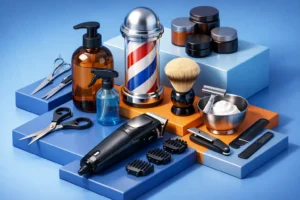
What Is Precision in Trimmer Performance?
- Home
- Single Blog

What Is Precision in Trimmer Performance?
A trimmer can be sharp, powerful, and expensive – and still not be precise. If your edge work feels inconsistent, your corners balloon out, or your detail work takes too many passes, the real issue usually comes back to one thing: precision in the trimmer itself. So, what is precision in trimmer performance? It is the tool’s ability to cut exactly where you intend, with control, consistency, and clean results every time.
For barbers, precision is not a marketing word. It shows up in the lineup, the beard outline, the neck cleanup, the parts, and every detail that turns a good cut into finished work. For home users who care about sharp grooming, it matters for the same reason. A precise trimmer gives you a cleaner result with less guesswork.
What is precision in trimmer use?
Precision in trimmer use means accuracy at the point of contact. The blade cuts where you place it, responds predictably, and leaves a crisp line without dragging, snagging, or forcing you to go back over the same area again and again.
That precision comes from a mix of factors, not just blade sharpness. Blade shape, tooth spacing, motor consistency, weight balance, visibility, and zero-gap setup all play a part. A trimmer is precise when it lets the barber stay tight in small areas and create clean definition without fighting the machine.
In shop terms, precision means confidence. You can tap in a corner, carve a sharp C-cup, clean a beard line, or detail around the ears knowing the blade will respond the same way on every pass. That kind of reliability saves time and protects the cut.
Why precision matters more than raw power
A lot of people confuse power with performance. Power matters, especially on dense hair and bulk detailing, but precision is what gives a trimmer professional value. A trimmer with a strong motor but poor control can still push lines too deep, irritate the skin, or make detailed work harder than it should be.
Precision matters because trimmers are finishing tools. They are built for close work, exposed areas, and visible lines. That means every movement counts. On a fade, the lineup frames the haircut. On a beard service, the outline shapes the whole face. When the trimmer lacks precision, the final result looks softer, less intentional, and less polished.
There is also a speed factor. Precise tools reduce correction work. Instead of chasing symmetry or cleaning up fuzzy edges, you can execute the line and move on. In a busy shop, that difference adds up over a full day.
The parts of a trimmer that create precision
The blade is the first piece. A T-blade gives more visibility and reach, especially around corners, behind the ear, and in beard detailing. A narrow blade can offer tighter control in small spaces. Neither is automatically better in every case. It depends on your hand, your service mix, and how much open visibility you want while cutting.
Blade sharpness matters, but so does blade geometry. Fine teeth can help with detail and close cutting, while deeper or wider tooth patterns may handle thicker growth differently. Precision is not just about getting close. It is about staying controlled while getting close.
Motor consistency is another major factor. A trimmer that hesitates, bogs down, or surges under pressure will not cut predictably. That can lead to pushed lines, uneven detail, and more passes than necessary. A steady motor keeps the blade cutting evenly, which is critical when you are working on a sharp edge.
Weight and balance also matter more than people think. If the trimmer is awkward in the hand, nose-heavy, or difficult to rotate, your control suffers. Detail work depends on small movements. A well-balanced trimmer feels like an extension of the hand, not a chunk of metal you are trying to steer.
Then there is blade exposure and visibility. A precise trimmer lets you see exactly where the cutting edge is landing. When visibility is poor, your line work becomes more cautious and less efficient. Good precision tools help you stay accurate without second-guessing every tap.
What zero-gapped means for precision in a trimmer
If you work with trimmers regularly, zero-gap setup is part of the conversation. A zero-gapped trimmer has the cutting blade adjusted very close to the stationary blade so it can cut sharper and closer. That can improve detail work, especially for lineups and finishing.
But zero-gap is not a cheat code. It increases cutting closeness, not automatic skill. A badly adjusted trimmer can become harsh, nick skin, and cause irritation. Precision improves when the blade is set close enough to hit clean without becoming aggressive.
This is where experience matters. Some barbers want an ultra-tight hit for lineup work. Others prefer a little safety margin for all-day use on different skin types. The right setup depends on who is in your chair, how you work, and how much sensitivity you are willing to trade for closeness.
Signs your trimmer is not truly precise
A trimmer that lacks precision usually tells on itself fast. You see it when you need multiple passes just to get a line clean. You feel it when the blade drags or bites instead of gliding. You notice it when one side of the lineup comes together easily and the other side feels harder to control.
Another sign is overcorrection. If your trimmer makes it easy to push a line back by accident, that is not precision. That is a lack of forgiveness mixed with poor control. The goal is a trimmer that responds accurately, not one that punishes every small adjustment.
Skin reaction can also be part of the story. A super-close trimmer is not automatically precise if it leaves irritation after basic detailing. Clean results should not come at the cost of unnecessary trauma, especially on sensitive areas like the neck and beard line.
How to judge precision before you trust a trimmer
Start with the lineup test. A precise trimmer should create a clean edge with minimal passes and clear visibility. It should let you tap in corners without chewing them up and define a front line without feeling jumpy.
Next, pay attention to control around curves and tight spaces. Behind the ear, around the mustache, and on beard corners, the trimmer should feel stable and easy to angle. If it feels bulky or blocks your sightline, precision suffers even if the blade itself cuts well.
You should also judge consistency through a full day of use. Some trimmers feel great on the first client and lose their edge once heat builds or battery drops. Real precision is repeatable. It holds up through back-to-back services, not just one clean demo.
For serious users, maintenance is part of the test too. A trimmer that goes out of alignment too easily or loses performance fast will not stay precise for long. Good tools need care, but they should also be built to hold their setup.
Precision for barbers versus home users
Professional barbers and home groomers both want precision, but they use it differently. In the shop, precision has to perform under volume. You need a trimmer that hits consistently across different hair textures, growth patterns, and service types. It has to earn its place every day.
For home users, precision is more about clean self-grooming and ease of control. That might mean shaping a beard, edging a neckline, or cleaning around the ears. In that setting, a slightly more forgiving trimmer can be the better choice, especially if the user is not trained to work with a very aggressive blade.
That is why the best trimmer is not always the closest one. Sometimes the smarter pick is the one that gives you a clean finish with better stability and less risk. Precision is always tied to the user, not just the machine.
What precision really looks like in daily work
In real barbering, precision shows up as fewer wasted motions, cleaner visual impact, and tighter control under pressure. It means your trimmer helps you finish strong instead of forcing you to fix small mistakes. It gives structure to the haircut and sharpness to the service.
That is why barbers who take their craft seriously do not judge trimmers on hype alone. They judge them on feel, response, consistency, and how well they hold a line. A precise trimmer does not just cut close. It lets you execute exactly what your eye sees.
At Encore The Barber, that standard matters because tools are supposed to support the work, not get in the way of it. When your trimmer is truly precise, every detail gets cleaner, every service gets smoother, and your results speak before you do.
If you are choosing your next trimmer, look past the loud claims and focus on the one question that actually matters: when the blade touches the line, does it do exactly what you meant it to do?
Share This :
Search
Recent Post
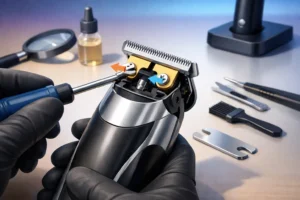
How to Set Trimmer Zero Gap Safely
July 3, 2026
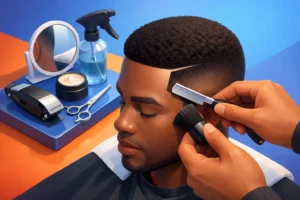
How to Sharpen Lineup Edges Cleanly
July 1, 2026
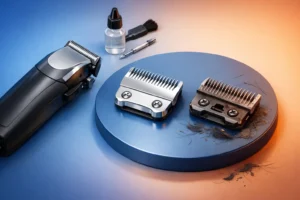
When to Replace Clipper Blades
June 29, 2026