

360 Wave Maintenance Guide That Works
- Home
- Single Blog
360 Wave Maintenance Guide That Works
If your waves look sharp on day two and fall apart by day four, the issue usually is not your hair. It is your routine. A real 360 wave maintenance guide is less about chasing products and more about controlling moisture, brush work, compression, and timing. Get those right, and your pattern stays cleaner, deeper, and easier to manage between cuts.
What 360 wave maintenance really comes down to
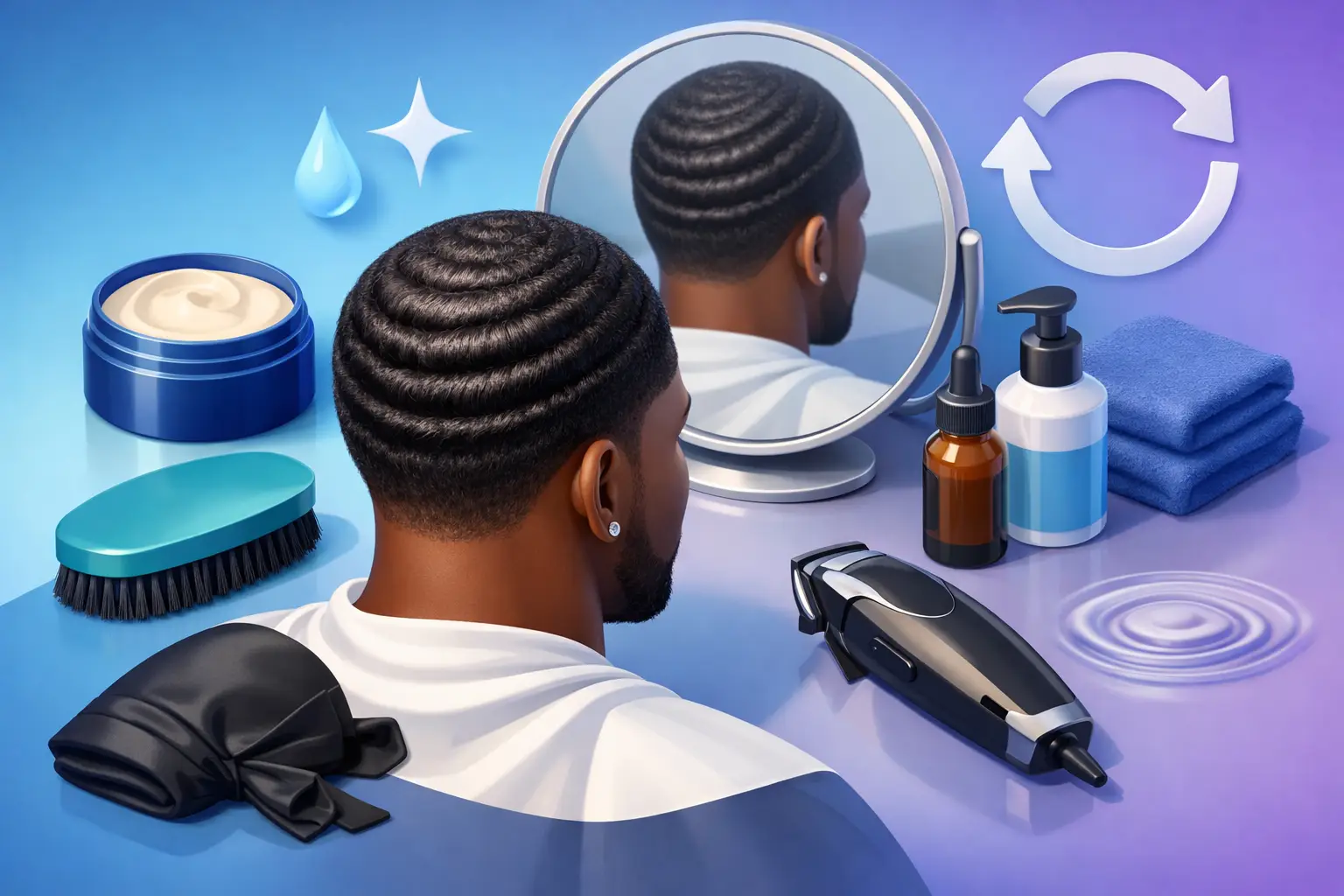
Waves are a trained pattern. Once that pattern is set, maintenance is the work that keeps it laid, defined, and connected as your hair grows. That means keeping the hair conditioned enough to move, brushing with direction and purpose, and using compression to lock everything in place.
A lot of people overcomplicate it. They buy too many pomades, switch brushes every week, or wash too aggressively and wonder why their progress stalls. Strong wave maintenance is built on consistency. The basics done on schedule will beat a random heavy session every time.
Hair texture matters, and so does length. Coarser hair usually shows progress faster but can dry out quicker. Looser textures may need more time and more disciplined brushing to build visible definition. Neither one is easier. They just respond differently, so your maintenance routine has to match what your hair is doing.
The core routine in any 360 wave maintenance guide
The foundation is simple. Brush, moisturize, compress, and protect. The mistake is doing those steps without structure.
Brushing should follow your pattern, not your mood. Every stroke trains the hair. If your crown placement is off or your angles change from session to session, you create forks and weak connections. A medium brush is the workhorse for most stages, while a soft brush helps finish and smooth. Harder brushes can help when your hair gets thicker, but if your scalp feels raw, you are doing more damage than good.
Moisture keeps hair workable. Dry hair resists training and breaks easier. That does not mean loading your scalp with greasy product every day. Light, controlled moisture usually performs better than heavy buildup. If your hair feels soft but still lays down, you are in a good place. If it feels waxy, sticky, or dull, you have probably gone too far.
Compression is where a lot of progress gets sealed. A durag keeps your pattern in place after a brush session and while you sleep. Without compression, your hair lifts, frizzes, and loses definition faster than most people realize. If you are serious, wearing a durag at night is not optional. During the day, it depends on your setting, your cut, and how much movement your hair gets.
Protection matters too. Sweat, friction, pillowcases, hats, and even constant hand contact can break down a clean pattern. Good maintenance means reducing that wear before you have to fix it.
How often should you brush, wash, and moisturize?
This is where trade-offs show up. More is not always better.
Most wavers do well with one to three focused brush sessions a day instead of nonstop brushing. Ten to twenty minutes with clean angles and real attention is more useful than an hour of lazy reps. If your scalp is getting irritated, pull back and let it recover. Healthy scalp, better progress.
Washing depends on product use, scalp condition, and lifestyle. If you use heavier products, work long days, or sweat often, you may need to wash more regularly. If your hair dries out easily, spacing washes a little farther apart can help. For many people, one or two washes a week keeps the balance right.
Moisturizing usually works best when it is light and intentional. A small amount applied to slightly damp hair goes further than piling product onto dry hair. The goal is to keep the hair trainable, not overloaded. Barbers see this all the time – clients think shine means healthy waves, but buildup can flatten progress and make the scalp harder to manage.
Washing without destroying your pattern
A weak wash routine can set you back fast. If your waves vanish every wash day, you need more control.
The key is to keep the hair laid while cleansing. Many wavers use the wash-and-style method because it helps preserve the pattern through the process. That means brushing product through the hair in the wave direction, creating lather, brushing again, and then compressing before rinsing carefully. The exact method can vary, but the principle stays the same: keep the pattern organized from start to finish.
Use a shampoo that cleans without stripping and a conditioner that brings softness back into the hair. If your scalp is dry, itchy, or flaky after every wash, your routine is too harsh or too frequent. If your hair feels coated and limp, it may not be getting clean enough. Strong maintenance lives in that middle ground.
After washing, do not rough-dry your hair with a towel like you are cleaning a car. Pat it down or use a method that keeps the hair moving in the right direction. Then compress while it sets.
The role of products in a 360 wave maintenance guide
Products should support the pattern, not replace discipline.
A good moisturizer or light oil can help soften the hair and reduce breakage. Shampoo and conditioner matter because unhealthy hair will not hold a clean look for long. Brush quality matters because cheap bristles can scratch the scalp or fail to move the hair properly. A solid durag matters because weak compression gives weak results.
Pomades and heavier stylers can help some hair types hold shape, especially during certain stages, but they are not automatic wins. The trade-off is buildup. If your scalp clogs easily or your waves start looking dull, back off. You want control and definition, not a film sitting on top of your hair.
This is where barber-grade tools make a real difference. Better brushes, better compression, and cleaner maintenance products save time and reduce guesswork. That is one reason serious wavers and working pros lean toward tested gear instead of whatever is cheapest on the shelf.
How to handle wolfing without losing control
Wolfing is where maintenance gets exposed. Anybody can look decent right after a cut. Real wave discipline shows up when the hair gets thick and starts fighting back.
As you wolf, your pattern has more room to deepen, but only if you stay ahead of the bulk. That usually means longer brush sessions, stronger compression, and more attention to weak sides and the crown. A medium or hard brush may become more useful here, but you still need a soft brush to smooth and finish.
If your hair starts overcurling in spots, tangling, or creating forks, do not panic-cut right away. First, check your brushing angles. A lot of wolfing problems are really technique problems. If the pattern still looks crowded or uneven, your next cut may need to come a little sooner or at a slightly different guard length.
There is no perfect wolf length for everybody. It depends on your texture, your connections, and how well you can maintain control while the hair grows.
Fixing weak areas, forks, and crown issues
Every wave pattern has a trouble spot. Usually it is the crown, one side that lags, or a fork where two directions are competing.
The fix is usually less dramatic than people think. You need more targeted brushing, cleaner angles, and patience. If one side is weaker, give it extra brush time without rushing the rest of the head. If a fork is forming, identify which angle is breaking the pattern and stop feeding it. If the crown is messy, work from the crown out with more precision instead of brushing over it like a flat section.
This is also where mirror work matters. You cannot correct what you are not seeing. A few focused sessions with attention to the problem area will usually do more than another week of random brushing.
When to get a cut
Maintenance is not just what happens between cuts. The cut itself affects the pattern.
Cut too low, and you may lose progress. Cut too high after a long wolf, and the bulk can hide your definition. Most wavers do best with a consistent rhythm and a barber who understands wave work. Ask for a cut that preserves the pattern instead of resetting it.
Your ideal guard depends on how deep your waves are, how fast your hair grows, and whether you are building or maintaining. A lower cut can sharpen an established pattern. A little more length can help if you are still trying to build. It depends on where your hair is right now, not where somebody else says it should be.
If you want shop-level consistency at home, the standard does not change. Clean brush sessions, controlled moisture, proper wash days, solid compression, and cuts that respect the work you already put in. That is the lane.
Good waves are not about doing the most. They are about keeping your hair under control long enough for the pattern to stay honest. Stay disciplined, pay attention to what your hair responds to, and let your routine do the talking.
Share This :
Search
Recent Post
How to Set Trimmer Zero Gap Safely
July 3, 2026
How to Sharpen Lineup Edges Cleanly
July 1, 2026
When to Replace Clipper Blades
June 29, 2026