When to Replace Clipper Blades
- Home
- Single Blog
When to Replace Clipper Blades
A blade usually tells on itself before it fully quits. The fade starts taking extra passes. The lineup loses that first-hit sharpness. The machine sounds fine, but the cut feels slower, rougher, less controlled. If you are wondering when to replace clipper blades, the real answer is not based on one date on the calendar. It comes down to performance, client comfort, and whether your tool is still helping you work clean.
For working barbers, blade condition is not a small maintenance issue. It affects speed, finish quality, and trust in your setup. At home, it matters too. A worn blade can pull, heat up fast, and leave an uneven result no matter how steady your hand is. Good technique still matters, but even strong hands cannot force weak hardware into giving professional results.
When to replace clipper blades in real shop conditions
The cleanest answer is this: replace the blade when it stops cutting like it should after proper cleaning, oiling, and adjustment. That matters because not every bad cut means the blade is done. Hair buildup, dry metal, a misaligned blade, or a tired clipper motor can all create similar symptoms.
Still, there is a point where maintenance stops solving the problem. If the blade has been cleaned, disinfected, oiled, and tested, and it still drags, skips, or leaves inconsistency in the blend, replacement is the move. Professionals feel this faster than casual users because repetition exposes weakness. In a busy shop, a blade that is even slightly off becomes obvious by the third or fourth cut.
There is no perfect universal lifespan. A barber doing back-to-back fades six days a week will burn through blades faster than someone cleaning up their beard at home every few days. Coarse hair, dry cutting habits, poor maintenance, and heat all shorten blade life. Lighter use, proper lubrication, and regular cleaning can stretch it.
The signs your clipper blade is done
The first sign is usually a drop in cutting efficiency. You make a pass and the hair is still there. Then you go over the same section again, and maybe a third time. That extra work costs time and puts more stress on your wrist, clipper, and blend. A sharp blade removes bulk cleanly and predictably. A worn blade hesitates.
Pulling is another major red flag. Clients feel it right away, especially around sensitive areas like the neckline or lineup zone. If the blade is snagging instead of gliding, and you have already ruled out buildup or lack of oil, the cutting edge may be worn or damaged.
Heat is worth paying attention to as well. Clippers naturally warm up with use, but a blade that gets hot unusually fast can signal friction, wear, or poor surface condition. Sometimes a cleaning and oiling fixes that. Sometimes the metal has reached the point where it no longer runs efficiently.
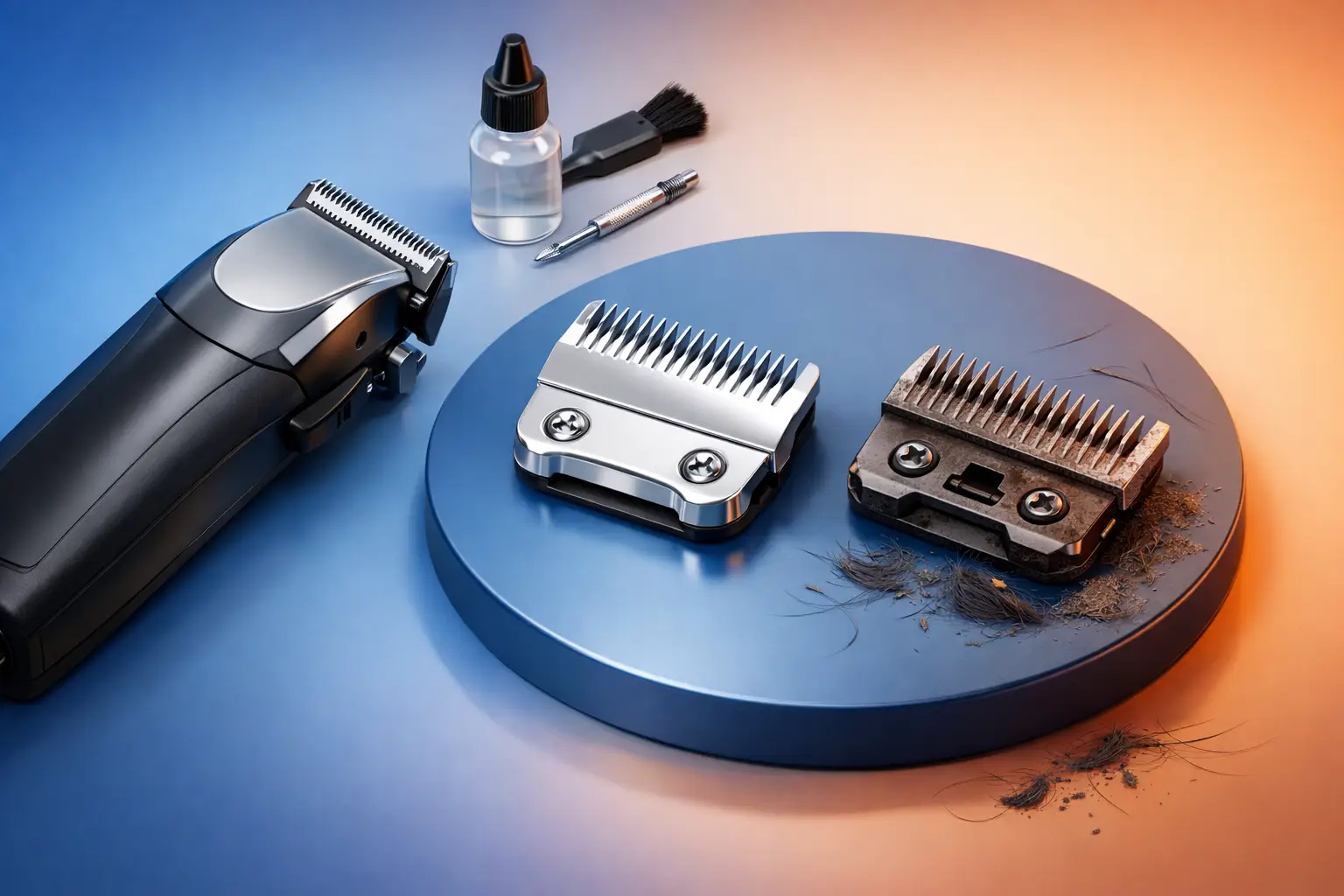
You should also watch for visible damage. Chips, corrosion, bent teeth, or uneven edges are not things to work around. Even minor blade damage can affect precision. On detail work, that difference shows up immediately.
Noise can change too. A healthy clipper has a familiar sound. When the blade starts rattling, chattering, or sounding strained, it may not be seated properly, but it can also mean the blade assembly is worn out. If adjustment does not bring it back, replacement is usually the smarter call.
Dull blade or maintenance issue?
This is where a lot of people waste good money or, worse, keep using a bad blade too long. Before replacing anything, do basic blade care the right way.
Brush out loose hair. Use a proper disinfecting and cooling spray if that is part of your routine. Add a few drops of clipper oil across the blade teeth and at the contact points. Run the clipper briefly so the oil distributes evenly. Then test again on clean, dry hair.
If performance comes back, the blade was dry or dirty, not dead. If it improves only a little and falls off again quickly, that usually means the edge is fading. If there is no improvement at all, replacement becomes more likely.
Alignment matters too, especially for trimmers and zero-gapped setups. A blade that is slightly off can cut poorly or feel aggressive on skin. Check that before assuming the blade is finished. But if alignment is right and the cut is still weak, trust what the tool is telling you.
How usage changes when to replace clipper blades
A barber in a high-volume shop should think in terms of workload, not months. If a blade is touching multiple heads a day, taking down bulk, blending dense hair, and doing detail work, it is working hard. In those conditions, blade wear can show up fast even with solid care.
Home users usually get more life out of the same blade, but there is a trade-off. Because they use clippers less often, they may miss the slow drop in performance. What feels normal can actually be a blade getting dull over time. If your cuts have gradually become less clean and you assumed it was your technique, the blade may be the issue.
Hair type matters. Coarse, dense, curly, and dry hair can be tougher on blades than finer textures. Product buildup matters too. Cutting through dirty hair, heavy product, or moisture puts more stress on the blade and can speed up wear.
Sharpen or replace?
This depends on the blade, the cost, and your standards. Some professional blades can be sharpened and brought back into service, especially if the metal quality is strong and the blade body is still in good shape. For barbers who know their setup and have a trusted sharpening source, that can be a smart move.
But sharpening is not always the best answer. If the blade teeth are chipped, the metal is corroded, or the blade has already been sharpened multiple times, replacement makes more sense. There is also the performance question. A freshly sharpened blade should cut clean, but not every sharpening job is equal. If your results need to stay consistent every day, reliability beats squeezing extra life out of a questionable blade.
For many users, especially with lower-cost blades, replacing is simpler and more predictable. Professional standards are about execution, not sentiment. If the blade is costing you time or comfort, it is already too expensive.
How to make your blades last longer
Blade life is heavily tied to routine. A barber who oils consistently, brushes out hair between cuts, and keeps blades cool will usually get better performance over time than someone running dry and hoping for the best.
Do not let hair and product sit in the blade after use. That buildup creates friction and dulls performance faster than most people realize. Keep the blade lightly oiled, but not flooded. Too little oil increases wear. Too much attracts debris.
Use the right blade for the job. If you are forcing a finishing blade to do heavy bulk removal all day, expect faster wear. Match your setup to the work. Also pay attention to storage. Tossing clippers loose into a drawer or station can damage blade teeth without you noticing until the next cut.
If you rotate tools, do it. Giving one clipper or trimmer a break reduces heat buildup and spreads wear across your setup. In a serious shop, redundancy is not extra. It is part of staying sharp.
What happens if you wait too long
A lot of barbers push a blade past its best days because it is still technically cutting. That is the trap. A blade does not need to completely fail to hurt your work. It just needs to get 15 percent worse. That is enough to slow your rhythm, soften your details, and make every service take longer.
Client comfort drops first. Then consistency. Then confidence. You start compensating with pressure, extra passes, or angle changes you normally would not need. That can throw off your flow and raise the risk of irritation.
For home users, waiting too long usually means frustration. The clipper feels weaker, the finish looks patchy, and the whole grooming process becomes more work than it should be. A sharp blade makes the tool feel right again.
A simple standard to follow
If your blade is clean, oiled, aligned, and still not delivering smooth cutting, replace it. If it pulls hair, heats up unusually fast, skips on the first pass, or shows visible tooth damage, replace it sooner. If you are questioning the tool during a service, that hesitation alone is a sign.
At Encore The Barber, the standard is simple: your tools should work as hard and as clean as you do. A fresh blade is not about chasing perfection for no reason. It is about control, consistency, and keeping your work at a professional level every time the clipper touches hair.
A good blade should disappear into your process. The moment you start noticing it for the wrong reasons, it is time to make the switch.
Share This :
Search
Recent Post
How to Set Trimmer Zero Gap Safely
July 3, 2026
How to Sharpen Lineup Edges Cleanly
July 1, 2026
When to Replace Clipper Blades
June 29, 2026