Best Lineup Tools for Barbers
- Home
- Single Blog
Best Lineup Tools for Barbers
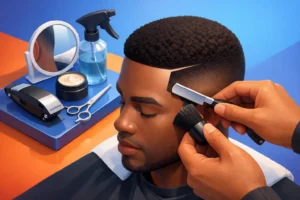
A client will forgive a lot before they forgive a crooked edge-up. That’s why lineup tools for barbers are not a side category in your station setup. They’re the difference between a cut that looks good under the cape and one that still looks sharp when the client checks every angle in the mirror.
A clean lineup is about more than having a steady hand. It comes from using the right tool at the right stage, with enough control to keep the line crisp without pushing it back, irritating the skin, or wasting time trying to fix what the wrong tool created. If your work depends on consistency, your lineup setup has to be built that way too.
What makes lineup tools for barbers worth the investment
A strong lineup starts with precision, but precision is never just one thing. Blade sharpness matters. Motor strength matters. Visibility matters. Even the brush you use to clear loose hair affects how accurately you can see the edge you’re building.
That’s why experienced barbers don’t treat lineups like a one-tool job. The trimmer might create the shape, but prep, detail work, cleanup, and finishing all depend on the supporting tools around it. When those tools are weak, the lineup takes longer and gets less reliable. When they work together, the service gets tighter and faster.
The trade-off is simple. Buying cheap or incomplete equipment can save money upfront, but it usually costs more in repeated replacement, uneven performance, and slower services. For a working barber, that math catches up quickly.
The core lineup kit every barber should have
Trimmers are the foundation
If there’s one tool that defines your edge-up work, it’s the trimmer. For lineups, you want a trimmer that hits clean, stays cool enough for repeated use, and gives you strong visibility at the blade. A bulky body or weak motor makes detail work harder than it needs to be.
Not every barber likes the same feel. Some want a hard-hitting trimmer that removes bulk around the perimeter fast. Others prefer something more forgiving so they can tap in corners and curves without overcutting. That part depends on hand style, pressure, and the kind of clientele you service most.
What does not change is this: your lineup trimmer has to be dependable. If power drops mid-day, if the blade snags, or if the body shape blocks your sight line, your execution suffers. Professional-grade performance is not about hype. It’s about whether the tool can hold up through a full schedule and still give you the same result on the last client that it gave on the first.
Foil shavers finish what trimmers start
A sharp lineup often looks even cleaner when the surrounding area is knocked down with a foil shaver. This is especially useful on bald fades, beard work, and neck cleanup where contrast makes the line pop.
The key is knowing where a shaver belongs. It is a finishing tool, not a shaping tool. If you try to create the actual lineup with a foil shaver, you lose control fast. But if the trimmer has already built the line, the shaver can clean the area around it and raise the overall finish.
Skin sensitivity matters here. Some clients can handle aggressive finishing. Others will light up with razor bumps if you push too hard or hit the same area too many times. A barber who knows when to stop usually gets better long-term results than one who tries to make every client look airbrushed for ten minutes.
Spray bottles help control the canvas
A good spray bottle seems basic until you work without one. Light moisture helps settle the hair, reveal growth patterns, and make it easier to comb everything into place before you touch the line. On beards, it can help you shape more evenly. On hairlines, it gives you a cleaner read of what’s natural and what’s just loose hair sitting up.
The mistake is over-wetting. If the hairline is too wet, visibility drops and the line can shift once everything dries. You want just enough control to organize the area, not soak it.
Barber brushes keep your view clean
Loose cut hair ruins accuracy. A cleaning brush or fade brush clears the lineup area so you can see every corner, dip, and inconsistency before it becomes a problem.
This matters most during detail work. A barber who keeps brushing between taps usually builds cleaner lines because they’re working from a clear visual. A barber who lets hair collect around the edge is guessing more than they think.
Combs matter more than people admit
A pic comb or detail comb helps lift and separate hair at the front edge, especially on coarse textures, curls, and dense growth patterns. If the hair is matted down or growing in different directions, your trimmer can’t read the true shape cleanly.
Combs also help with symmetry. Before you set the corners, you need to see how the hair naturally falls from both sides. That extra few seconds of combing can save you from forcing an edge that looks sharp up close but off-balance from the front.
How to choose lineup tools for barbers who work all day
A lineup tool can feel great for one client and still fail in a real shop setting. What matters is day-to-day performance. Battery life matters if you move fast and hate charging interruptions. Corded backup matters if your schedule is packed and downtime is not an option. Ergonomics matter because lineup work is small-movement work, and poor balance wears on your hand over time.
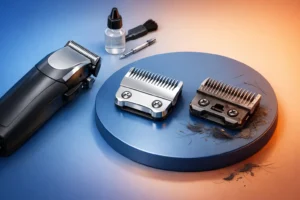
Blade maintenance is another factor that gets ignored until it becomes a problem. A trimmer that cuts well when fresh but falls off quickly without constant adjustment may not be the right fit for every barber. Some tools reward techs who like to tune and modify. Others are better for barbers who want consistent out-of-box performance with simple upkeep.
Then there’s noise, heat, and vibration. These things may seem minor on paper, but they affect comfort for both barber and client. A tool that gets hot too quickly can disrupt service flow. A tool with too much vibration can reduce control on detailed corners and curves.
For serious shop use, durability is part of the lineup conversation. Tools get dropped. They get used back-to-back. They sit under disinfectant routines and constant handling. If the housing cracks easily or the switch starts failing after heavy use, it was never built for professional work in the first place.
Technique and tools have to match
Even the best lineup tools for barbers won’t fix rushed technique. A sharp blade in unsteady hands just creates cleaner mistakes.
Your tool choice should support how you work. If you cut with a light touch and build the line gradually, you may want a trimmer that gives you more forgiveness and detail control. If you’re experienced and decisive, a stronger hitting blade may suit your pace better. Neither approach is automatically better. The goal is repeatable execution.
It also depends on the client. Pushing a lineup back to make it look extra crisp might impress for a day, but it can damage trust if the client sees too much forehead after a week. Strong barbers know how to work with the natural line, clean it up, and still deliver impact.
That’s where supporting tools earn their keep. A brush keeps your view clean. A spray bottle helps you manage the hair. A shaver sharpens the finish around the line. The lineup itself is still skill, but the right setup gives that skill room to show.
Building a station that delivers cleaner lineups
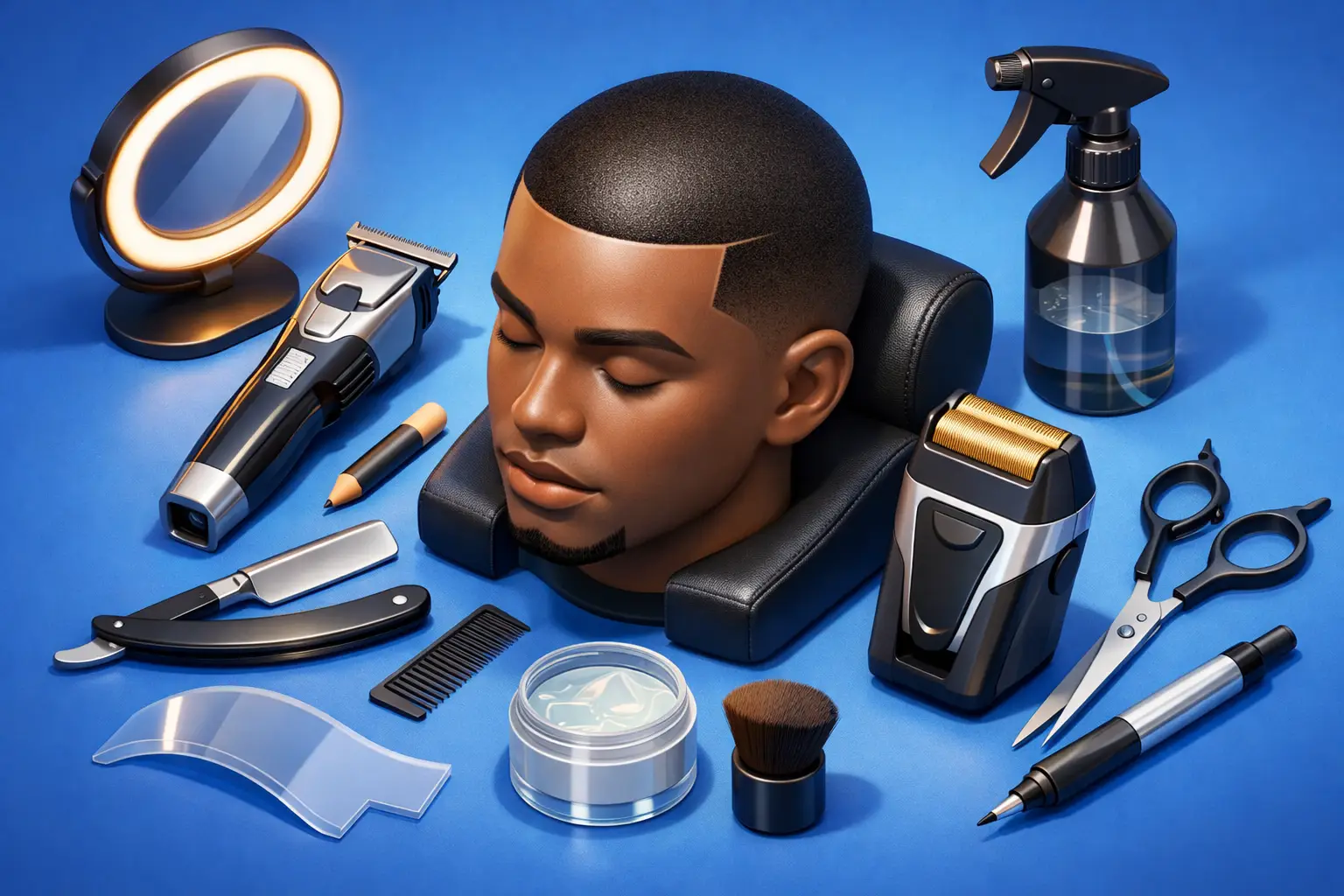
A lineup-focused station should be arranged around speed and visibility. Your trimmer, shaver, brush, comb, and spray bottle should all be within reach without breaking rhythm. The less you stop to search for a tool, the easier it is to stay locked in during detail work.
Cleanliness matters too. Dirty blades and hair-packed tools reduce performance fast. Regular brushing, oiling, and disinfection are part of lineup quality, not separate from it. A neglected trimmer will tell on you eventually.
This is where a professional setup separates itself from a random collection of gear. Every item should have a purpose tied to execution. That’s the standard brands like Encore The Barber are built around – tools that support barbers who care about clean results, control, and consistency, not gimmicks.
The real standard for lineup tools
The best lineup tools are the ones that let you work with confidence on every client, not just the easy ones. They help you stay precise when the hairline is uneven, when the beard is dense, when the corners need patience, and when the schedule is full.
That means choosing tools that match real barber work. Strong cutting performance. Good visibility. Reliable battery or corded support. Clean finishing ability. Easy maintenance. If a tool misses on those basics, it doesn’t matter how good it looks on the box.
Your lineup is one of the first details clients notice and one of the last things they remember. Build your station like that fact matters.
Share This :
Search
Recent Post
How to Set Trimmer Zero Gap Safely
July 3, 2026
How to Sharpen Lineup Edges Cleanly
July 1, 2026
When to Replace Clipper Blades
June 29, 2026