Precision Hair Cutting Techniques That Work
- Home
- Single Blog
Precision Hair Cutting Techniques That Work
A clean fade can still fall apart if the shape is off. That is why precision hair cutting techniques matter. They are not about cutting slower or making the service feel overly technical. They are about control – control of shape, weight, balance, and how the haircut grows out after the client leaves your chair.
For barbers, precision is what separates a decent cut from a repeat-client cut. Anybody can take bulk off. Not everybody can build a silhouette that stays sharp from every angle, blends with intention, and supports the client’s head shape, texture, and lifestyle. If your goal is consistency under pressure, precision has to be part of your system.
What precision hair cutting techniques really mean
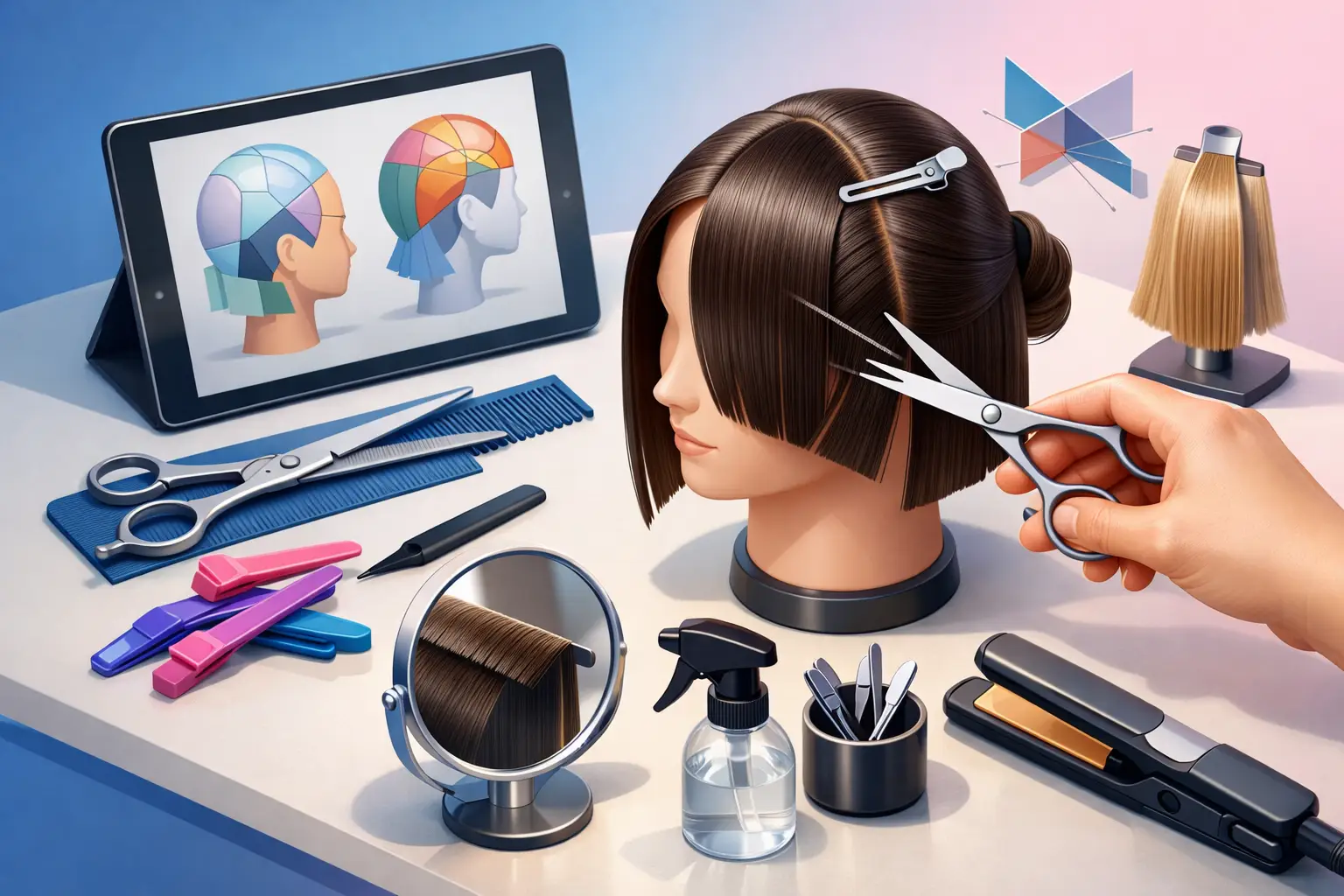
Precision cutting starts with exact sectioning, deliberate tension, and a clear guide. In barbering, that usually means every line you create has a purpose. You are not guessing your way through the top, rushing the crown, or trying to fix weight problems with thinning after the fact.
A precise cut looks cleaner because it is built cleaner. The perimeter is controlled. The distribution makes sense. The transition from short to long is intentional. Even in textured or softer styles, the structure underneath still has to be tight.
That does not mean every haircut should look stiff. Precision is not the same as hardness. A crop, shear cut taper, or longer scissor style can still move naturally. The difference is that the movement is designed, not accidental.
Sectioning sets the standard
Most cutting mistakes do not start with the shears. They start with lazy sectioning. If your panels are uneven, too large, or inconsistent with the head shape, your guide gets weak fast. Then the haircut turns into a correction job.
Good sectioning gives you repeatable control. It helps you track where weight should sit and where it should be removed. Around the parietal ridge and crown, this matters even more because the head shape changes quickly. A section that is too wide in a flat area might still behave. That same section in a rounded area can throw off the whole balance.
Clean partings also help with speed. That sounds backward until you have had to re-cut the same area three times because your first pass was sloppy. Precision saves time later.
Work with smaller, cleaner subsections
If the hair is dense, coarse, or highly textured, taking smaller subsections usually gives you better visual control. You can see your guide clearly, keep tension more consistent, and avoid pushing extra hair into the line. On finer or straighter hair, slightly larger subsections may still cut clean, but only if the guide remains visible.
The trade-off is simple. Smaller sections take longer in the moment, but they protect the finish. Larger sections can speed up the cut, but only when the hair type and haircut allow it.
Tension changes the result
One of the biggest reasons two barbers can use the same guide and still produce different haircuts is tension. Pulling too hard stretches the hair, especially in wet cutting or on hair with natural wave. Once it dries and retracts, the shape changes.
With precision hair cutting techniques, tension should match the texture and the goal. Straight hair usually tolerates firmer tension. Wavy and curly hair often need a lighter hand. Around the hairline, crown, and areas with strong growth patterns, too much tension can create unwanted holes, corners, or short spots.
Consistency matters more than force. If one subsection is cut with strong tension and the next is cut softly, the line will not hold. That is when a haircut starts looking uneven even though the guide looked right while you were working.
Watch the crown and recession areas
The crown exposes weak technique fast. Growth patterns shift, elevation changes quickly, and clients often have cowlicks or compression in that zone. If you overdirect carelessly or pull the hair out of its natural fall, the shape can collapse once the client styles it.
The recession area asks for the same discipline. It is easy to cut a clean line there when the hair is wet and stretched. It is harder to leave enough support so the front still looks strong once it dries. Precision means respecting what the hair wants to do, not forcing it into a shape it cannot hold.
Elevation, overdirection, and weight control
If sectioning gives you order, elevation and overdirection give you shape. This is where advanced barbering stops being basic hair removal and becomes real design.
Low elevation keeps weight. Higher elevation removes it. Overdirection shifts that weight from one place to another. When you understand those two levers, you can stop relying on heavy clipper correction and build the haircut properly with shears.
For example, a strong square shape on top often needs controlled elevation and minimal overdirection to keep a solid outline. A more elongated shape may use forward or backward overdirection to preserve length where the client needs it. On a client with a narrow face, too much height can make the face look longer. On a rounder face, smart weight placement can sharpen the profile.
This is why one formula does not fit every head. Precision is not memorizing angles. It is knowing what those angles do.
Cutting lines: blunt, soft, and point-cut detail
Blunt lines create strong shape. They are useful for structure, perimeter control, and styles that need density. But blunt cutting on every section can leave the haircut too heavy, especially on thick hair or clients who want movement.
Point cutting softens the edge without destroying the line. It can release weight, improve flow, and help the shape sit more naturally. The problem is that a lot of barbers use point cutting as a rescue move instead of a planned technique. If the original shape is weak, random point cutting usually makes it weaker.
Slide cutting and channel cutting can also help with weight removal, but they demand feel and restraint. Use too much and the haircut loses authority. On finer hair, that can make the top look stringy. On coarse hair, it may create frizz or uneven expansion. Precision means choosing the right finish, not using every technique you know on one head.
Shear and clipper work need to agree
In barbering, precision is not just about scissor work. Your clipper work has to connect with the cut on top. If the fade is polished but the ridge into the top is bulky, the whole haircut feels disconnected.
This is where shape awareness matters. The blend area should support the silhouette, not just erase lines. Sometimes that means leaving more weight at the ridge for a square shape. Sometimes it means collapsing that area tighter for a more athletic profile. The right answer depends on the haircut, the client’s head shape, and how much contrast they want.
Barbers who stay sharp in this area do not treat clipper-over-comb and shear-over-comb as filler techniques. They use them as finishing tools for refinement. That is where control shows up – in the corners, behind the ear, through the occipital, and at the ridge where weak execution is easiest to spot.
Precision hair cutting techniques depend on your tools
Skill comes first, but tool quality still affects execution. Dull shears push hair instead of cutting it clean. Weak tension in the shear pivot can make the line feel inconsistent. A comb with too much flex can throw off your control during shear-over-comb work. Even your spray pattern matters because uneven moisture changes tension and cutting accuracy.
Professional barbers know the difference immediately. Good tools do not replace technique, but they support consistency, especially in a busy shop where your hands are repeating the same movements all day. That is why serious barbers stay locked in on performance, maintenance, and durability, not hype.
How to get more consistent results behind the chair
If your cuts look strong one day and average the next, your issue is probably not talent. It is usually inconsistency in setup. Maybe your sectioning changes when you get rushed. Maybe your tension gets tighter as the appointment falls behind. Maybe you stop checking balance once the fade starts looking clean.
The fix is not glamorous. Build a repeatable cutting order. Use the same visual checkpoints on every haircut. Step back and check symmetry before moving on. Cross-check your top work even when the client is talking and the shop is moving. Precision comes from discipline more than flash.
It also helps to study your own weak spots honestly. Some barbers are strong with shape but weak with crown control. Others can fade at a high level but leave too much weight in scissor work. If you know where your cuts usually break down, you can train with purpose instead of just cutting more heads and hoping it clicks.
A sharp haircut is not an accident. It is built through clean sectioning, controlled tension, smart weight placement, and tools that let your hands do exact work. Keep your standards high, keep your process tight, and the finish will start showing up more consistently in every chair you touch.
Share This :
Search
Recent Post
How to Set Trimmer Zero Gap Safely
July 3, 2026
How to Sharpen Lineup Edges Cleanly
July 1, 2026
When to Replace Clipper Blades
June 29, 2026